Faithful Pathways: Exploring Possible Intersections Between the Stewart Family and Presbyterianism in Hanover, Prince Edward, and Oglethorpe
The story of the Stewart family in early America is marked by movement, land acquisition, and military service, but it’s also shaped by their cultural heritage. The Stewarts were part of a larger wave of Scots-Irish migration, a group known for their Presbyterian faith. However, while the Stewarts’ direct involvement with the Presbyterian Church cannot be confirmed, their movement through key centers of early Presbyterianism in Hanover, Prince Edward, and Oglethorpe Counties offers intriguing possibilities. In this post, I explore these intersections, connecting the family’s journey with the broader narrative of Scots-Irish Presbyterianism in the South, while noting that any direct religious affiliation remains conjectural.
Hanover County, Virginia: The Great Awakening and Scots-Irish Roots
The Stewarts likely arrived in Virginia between 1710 and 1720, settling first in what became Goochland County and later moving into Hanover County. During the 1740s, Hanover became a hub of the Great Awakening, a revivalist movement that particularly resonated with the Scots-Irish, many of whom were Presbyterian. This group, historically rooted in Presbyterianism due to religious persecution in Ulster, Ireland, carried a strong sense of independence and community-building—values that also defined the Stewarts.
Samuel Morris’ “Reading House” gatherings marked the beginning of Hanover’s Presbyterian movement, with locals coming together to hear George Whitefield’s sermons. In 1743, Rev. William “One-Eyed” Robinson preached Hanover’s first Presbyterian sermons, sparking a four-day revival that became known as the “glorious days of the Son of Man.” Though there is no definitive evidence linking the Stewarts to these events, John Stewart Jr (1730–1784), who had possible connections with Hanover County as early as 1755, might have been among the many Scots-Irish drawn to this new evangelical style of worship.
The arrival of Samuel Davies in 1747 further cemented Hanover as a center for Presbyterianism. Davies’ efforts led to the formation of the Hanover Presbytery in 1755, a significant development for Presbyterian congregations across the South. Given the Stewarts’ Scots-Irish heritage and their proximity to these events, it is plausible—but not confirmed—that they were influenced by the wave of Presbyterianism spreading through the area.

Prince Edward County, Virginia: The Briery Church and Scots-Irish Settlers
In the 1760s, John Stewart Sr. (1699-1774) moved to Prince Edward County, where the Briery Presbyterian Church had been established as a focal point for Scots-Irish settlers. The Briery Church, founded during the Great Awakening’s spread into Virginia’s interior, played a central role in the local community’s spiritual and social life. Scots-Irish migrants, with their emphasis on moral discipline, community, and education, found a familiar home at Briery.

While it’s conjectural whether the Stewarts were members of the Briery Church, their Scots-Irish background makes this connection plausible. Briery was part of a broader network of Presbyterian congregations that shaped the cultural landscape of Prince Edward County. For the Stewarts, who were settling in this region at the same time, the church likely served as a key community hub, even if their direct involvement cannot be verified.
Oglethorpe County, Georgia: Beth Salem Church and the Scots-Irish Frontier
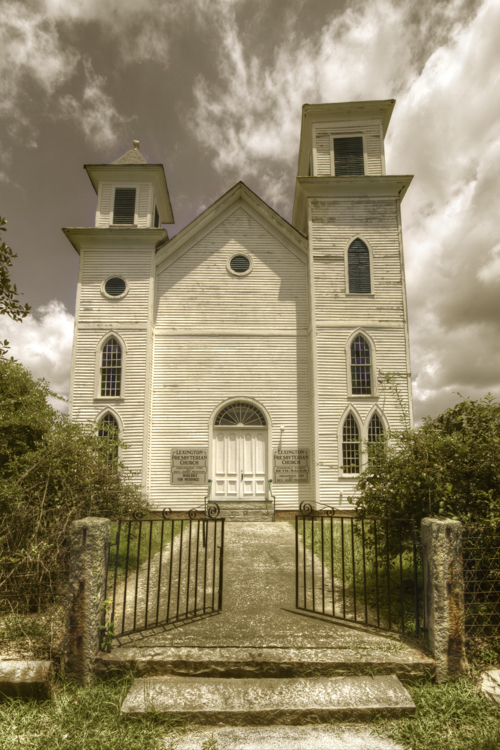
The Stewarts’ move to Oglethorpe County, Georgia, in the early 1800s marked a new chapter in their migration story. John Stewart III (1758–1829), along with his mother Ann Haw and siblings, joined a broader migration of Scots-Irish families seeking fresh opportunities in the southern frontier. This wave included many Scots-Irish Presbyterians who established Beth Salem Presbyterian Church in 1785, making it the first Presbyterian congregation in Northeast Georgia.

Beth Salem, also known as Lexington Presbyterian, was founded by a group of Pennsylvanians who ventured south as missionaries among Native Americans. It quickly became a center for spiritual life in the region, reflecting the same Scots-Irish emphasis on education, faith, and community-building seen in earlier generations. Although there’s no direct evidence that the Stewarts were active members of Beth Salem, their Scots-Irish heritage and presence in the county during this time suggest that they may have participated in or supported the local Presbyterian community.
Beth Salem, like many rural churches in Georgia, played a crucial role in shaping Oglethorpe’s development, becoming intertwined with the county’s economic and social fabric. The Stewarts’ presence in Oglethorpe, coupled with their Scots-Irish roots, makes it likely that Beth Salem was at least part of their community network, even if it’s not certain they were formal members of the congregation.
Conclusion: A Conjectural Connection to Presbyterianism
The Stewart family’s movements through Hanover, Prince Edward, and Oglethorpe offer a compelling narrative of potential intersections with the early Presbyterian Church in the South. While their direct involvement with these congregations cannot be confirmed, their Scots-Irish background and proximity to major centers of Presbyterian revival make the possibility intriguing.
Ultimately, the Stewart family’s story reflects the broader Scots-Irish experience in colonial America—a blend of migration, resilience, and faith that shaped the cultural and spiritual landscape of the South. Whether or not the Stewarts were active Presbyterians, their journey aligns with the patterns of faith and settlement that characterized many Scots-Irish families, making their story an important part of the tapestry of early American history.
Leave a Reply