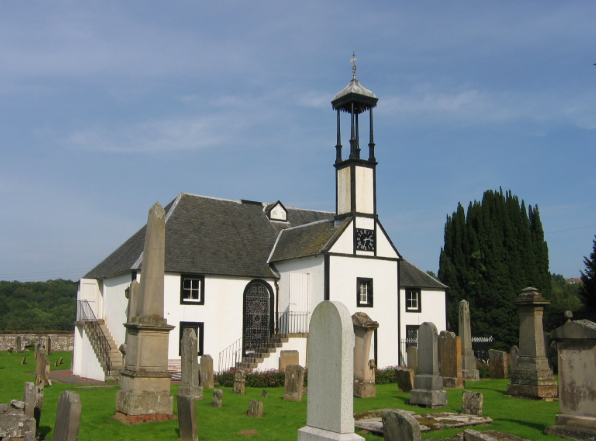
The Will of Robert Stewart of Dalserf: A Window into My Immigrant Ancestor
When I last wrote about the Stewarts of Dalserf, I explained how DNA evidence overturned an old family legend. For years, the story in our line was that our immigrant Stewart ancestor was descended from the Duke of Berwick, the illegitimate son of King James II. The tale was colorful, full of scandal and hidden nobility, but it was a myth. The DNA told a very different story: our haplogroup ties us not to the “royal Stuarts” but to the “old Stuarts” of Lanarkshire.
That conclusion was powerful in its own right. But recently, another piece of evidence emerged—one that adds flesh to the bones of the DNA trail. It comes from the 1723 will of Robert Stewart of Dalserf, filed in the Hamilton & Campsie Commissary Court. This document, written in a clerk’s hand nearly 300 years ago, may well contain the name of my immigrant ancestor.
The Will of Robert Stewart
The will begins simply enough: Robert Stewart, “in Dalserf,” deceased in 1723, leaving behind moveable goods, debts, and obligations. Unlike a laird’s testament, it lists no lands or heritable property—only sums of money owed to him and owed by him.
Most striking is one debt in particular: a bond for 400 merks, owed to Robert by John Bogle & Co., merchants in Glasgow, dated 1713. This was no trivial sum. It suggests Robert was not a poor tenant scraping by, but a man with enough capital to invest in Glasgow’s merchant houses, perhaps as a creditor or small-scale merchant-adventurer.
Then comes the most critical line for my research: the executor of Robert’s estate is named as John Stewart, his son. The court record confirms John as heir and executor on 9 July 1723.
A Son Named John
Why does this matter? Because my own immigrant ancestor in Virginia was named John Stewart. He appears in colonial Virginia records in the mid 1700’s, without clear evidence of when or how he arrived. If he was indeed the son and heir of Robert of Dalserf, the will explains much:
- Why there are no landholdings listed: Robert may have been a tenant in Dalserf, with wealth tied up in trade, not heritable estate.
- Why there is a connection to Glasgow merchants: merchant credit and the tobacco trade provided the capital for emigration.
- Why a son would have reason to leave Scotland: as executor, John would have inherited not land but debts to manage and merchant relationships to uphold.
This pattern fits perfectly with what we know of Scottish merchant families of the period. Fathers often invested in trade, while younger sons or heirs were sent abroad to act as factors, clerks, or planters in Virginia and the Caribbean.
From Dalserf to Virginia
The geography is telling. Dalserf lies on the River Clyde, directly tied into the same trade arteries that fed Glasgow’s growth. By the early 1700s, Glasgow was becoming the beating heart of Scotland’s tobacco trade with Virginia.
It is not difficult to imagine the scenario:
- Robert Stewart invests in merchant bonds in Glasgow.
- His son John inherits responsibility for those debts and connections.
- Rather than remain in Dalserf with no land to anchor him, John takes passage across the Atlantic, perhaps even as an agent for the Bogles or another Glasgow house.
- In Virginia, he transitions from merchant connections to planter life, eventually becoming the ancestor whose line my DNA now traces.
Connecting to the DNA Evidence
This new will ties directly back to the argument I made in my prior post, “The Stewart DNA Evidence: From Dalserf, Not Berwick.” The haplogroup evidence already pointed to Dalserf as the cradle of my line. Now the will of Robert Stewart adds a genealogical record that makes the connection even stronger.
The DNA told me our family could not descend from the Duke of Berwick. The will tells me, instead, that our immigrant ancestor was almost certainly the son of a Dalserf tenant-merchant, bound up in the same network of Glasgow’s trade with Virginia.
Leave a Reply