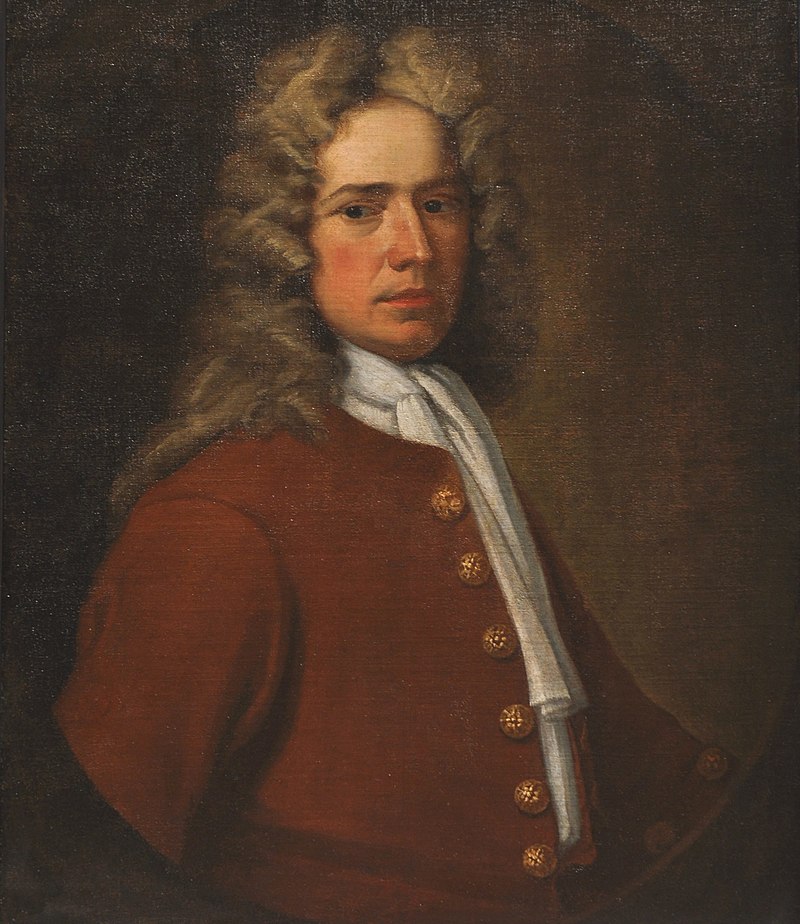
I found a couple of very interesting land transactions relating to the Stewart line of Fighting Creek. As you recall from prior blog posts, I believe my Stewart line descends from John Stewart of Fighting Creek. There is an especially interesting land transaction in 1729 that refers to both father and son, John Stewart Sr. and Jr.
Up until this point, I had thought that John Stewart Sr. was alive at the time of this 1729 transaction. However, I have recently uncovered some Virginia court records that would indicate otherwise:
At a Council held at the Capitol December 12th 1722. To William Finney for two thousand Acres on fighting Creek in Henrico County including an Entry made by John Steuart decd And by him never perfected and runing up along Appamatux River to compleat the said Quantity.
John Stewart Sr. died sometime prior to December 12th 1722, when William Finney appeared before a Virginia court and attempted to patent land on Fighting Creek previously claimed by John Stewart Jr.’s now deceased father.
It certainly helps to have friends in high places. The orphan, John Stewart Jr., not yet of age, turned to his friend Francis Epes IV (1686-1734), to petition for the land on John’s behalf. Francis was a member of the Virginia House of Burgesses, and his sister had married into the prominent Randolph family that held five thousand acres on Fighting Creek. Francis Epes IV’s petition was recorded in 1723. This petition also refers to John Stewart Jr.’s mother, deceased by this time, although she appears to have outlived John’s father.
At a Council held at the Capitol November 5th 1723. John Stewart an Orphan by Francis Epes his Friend setting forth by his Petition That his Father John Stewart deceased Entred for and Surveyed two thousand Acres of Land on Fighting Creek in Henrico County but neglected to sue out a Patent for the said Land, in his life time & leaving his Wive Stewart Executrix she likewise neglected to obtain a Patent for the same, and the necessary Certificate from the Surveyor being now lost, Wm Finney Clerk has thereupon by his Petition to this Board lately obtained an Order to Survey the said Land for his own Use ; The Petr therefore prays Leave to resurvey the said Land in Order to Obtain a Patent thereof exclusive of the said Wm Finney; This Board taking the premises in Consideration, Leave is accordingly Granted the Petitioner to resurvey the said Land and Ordered that a Patent be granted him for the same, and that no Survey thereof be made for ye sd Will Finney Clerk or any other person.
It is important to note that John Stewart Jr. is leveraging a ‘friend’ to speak on his behalf and not a ‘guardian’. There is no evidence that he had been assigned a guardian. In colonial Virginia, guardians were only assigned when there was an estate to manage. Therefore, John Stewart Jr’s parents likely died without an estate for their son to inherit.
In colonial Virginia, when land was purchased, a settler would first petition the county clerk for a patent. The clerk would then create a warrant certificate and send it to the colony’s secretary for recording. The clerk would also create a second certificate to authorize a survey. The surveyor would then send the survey plat to the surveyor-general’s office. The surveyor-general’s office would return the plat to the colony’s secretary, and keep an original or copy. The secretary would use the plat to create the patent, which would then be approved by the governor and council.
It seems as though John Stewart Sr. had a certificate warrant issued, and he had paid for a survey, but the survey was never completed. Perhaps there was a backlog of surveys to be done. Perhaps Francis Epes, the county surveyor, felt some guilt for never completing the survey, which is why he represented John Stewart Jr. as his ‘friend’ at court. Regardless, it seems reasonable to assume that both John Stewart Sr., and his wife, died fairly shortly after purchasing the warrant certificate and survey.
Based on what John Stewart Jr. later sold parts of the surveyed land for, the 1,600 acres was worth about 89K USD in today’s currency. The Stewart family would not have failed to finalize the survey process unless something, like a sudden illness such as small pox, prevented them from doing so. Had the patent process been completed, then John Stewart Jr. would have had an estate to inherit and he would have been assigned a guardian. Notably, neither of John Stewart Jr’s parents appears to have written a will. This is further evidence for the sudden onset of an illness.
Next, John Stewart Jr. turned to his friend John Bolling Jr., who also petitions the Virginia court on the same issue in 1724.

Notably, John Bolling Jr. (1700-1757) married the niece of the first president of William & Mary College. He was also the 2x great grandson of Pocahontas, the father-in-law of Thomas Jefferson’s sister, and the great grandfather of First Lady Edith Bolling Wilson. However, most importantly, his sister also married a Randolph.
At a Council held at the Capitol December 9th 1724. On the Petition of John Stewart by John Boiling his next Friend, praying that a Tract of Land formerly surveyed for his Father on Fighting Creek in Henrico County may be granted him without being obliged to seat and Cultivate the same until three Years after he comes of Age, and that the Survey’ of the said County may be directed to return a Platt and Survey without demanding any new Fee for that Service in regard the sd Survey was paid by the Pet” Father in his Life time; It is Order’d That Col Fran” Epes Survey of Henrico County be heared before this Board as to so much of the sd petition as relates to his Fee, and that the other part thereof be referred for further Consideration at the next Court of Oyer & Terminer.
John Stewart Jr.’s petitions appear to have been successful, because he patents 1,600 acres on Fighting Creek in 1725.
We now have a clear Randolph connection between John Stewart Jr., a neighbor of William Randolph Jr. on Fighting Creek, and John Bolling Jr. and Francis Epes IV, both Randolph brother-in-laws. Now, let us turn our attention to William Randolph Jr. (1681-1741).
William Randolph Jr’s father, William Randolph Sr. immigrated to Virginia from England sometime around 1669. Randolph’s family back in England were known Cavaliers, meaning they supported King Charles I (James II’s father) during the English Civil War of 1642 to 1647. Unfortunately, the Randolphs were on the losing side of the war, as Charles I was executed in 1649. As a result, many Cavaliers sought a fresh start in Colonial Virginia, including William Randolph Sr.
Even more interesting, William Randolph Sr. is said to have arrived in Virginia without any money and only an axe. Sound familiar? Just forty-one years later, around 1710, John Stewart Sr. would flee England, due to his connections to King James II, with no money and only a sword. Was this just a common tale at the time, or was there a shared experience here that bound together a tightly knit group of Colonial planters?
There is a wonderful piece of software called Deed Mapper, which aids in mapping old land patents. Many users of this software have provided access to their prior research which I have made much use of. Below is a view of John Stewart’s land grant at Fighting Creek. As you can see, he was in close proximity to William Randolph, Francis Epes, and John Bolling (whose land is just to the Northeast of this image).

Update: Subsequent research has clarified that the “orphan” John Stewart of Fighting Creek was John, son of John Stewart and Michal Ballow of the Ashen Swamp Stewart line. The Fighting Creek lands eventually passed to Benjamin Hatcher due to the Stewart–Hatcher connection through Susannah Hatcher, widow of William Hatcher, who later married John Stewart of this line. This means the Fighting Creek Stewarts are not related to the Amherst line I am researching. For full details, see my updated post.
Leave a Reply